The Question
UFoods, a food delivery company, wants to understand which customer segments respond best to marketing campaigns and how to optimize future campaign targeting.
Primary questions:
- Which customer demographics have the highest campaign acceptance rates?
- What purchase channels are most effective for campaign conversion?
- How do customer characteristics like education, marital status, and family size impact spending?
Key Findings
Top Performing Customer Segments
Customers that are married, educated, with 0-1 children, between ages of 41 and 50 were the most likely to accept campaigns and have higher sales overall. This group significantly outperforms similar segments.
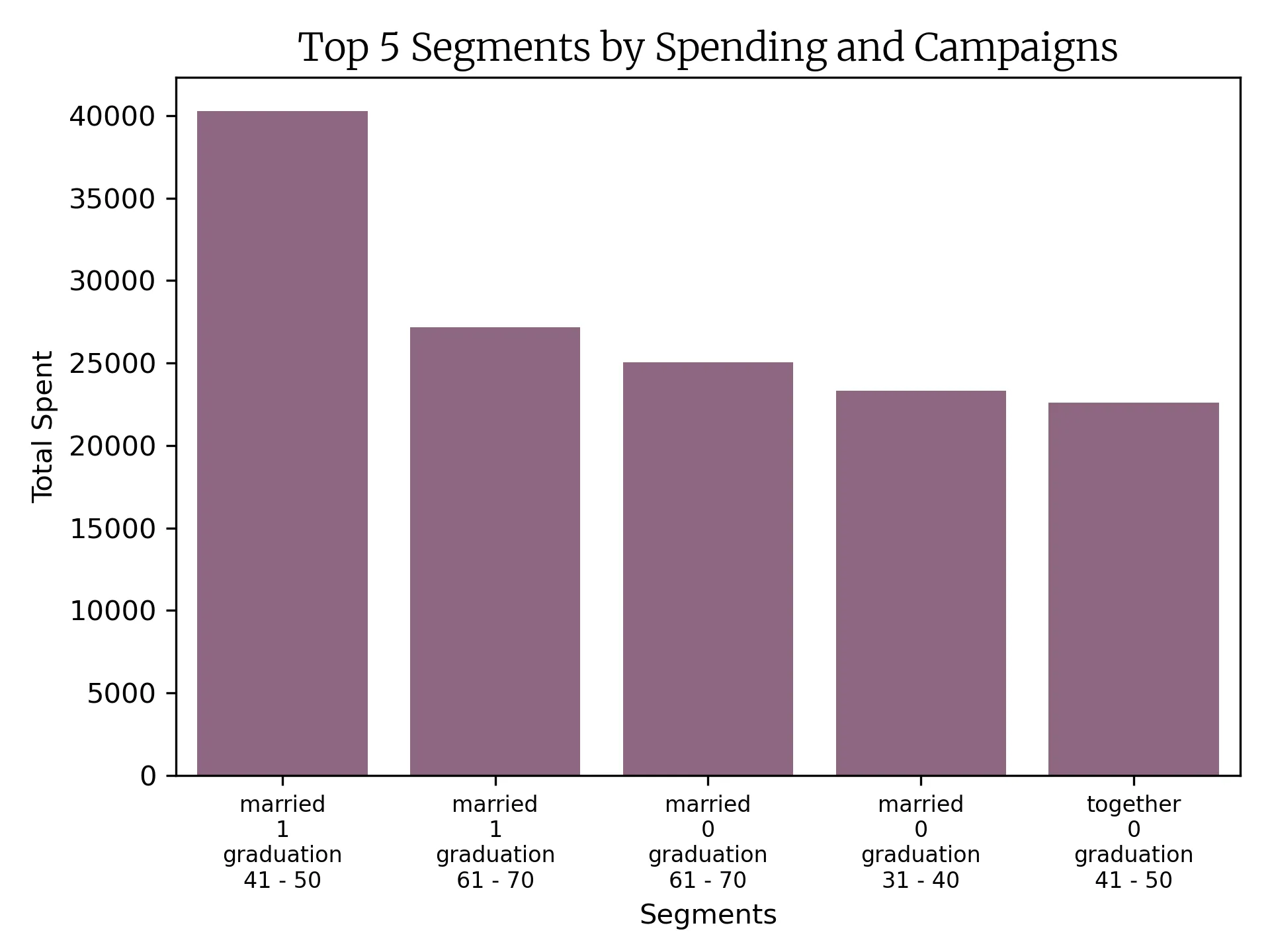
0-1: Represents Number of Children
Individual Campaign Performance
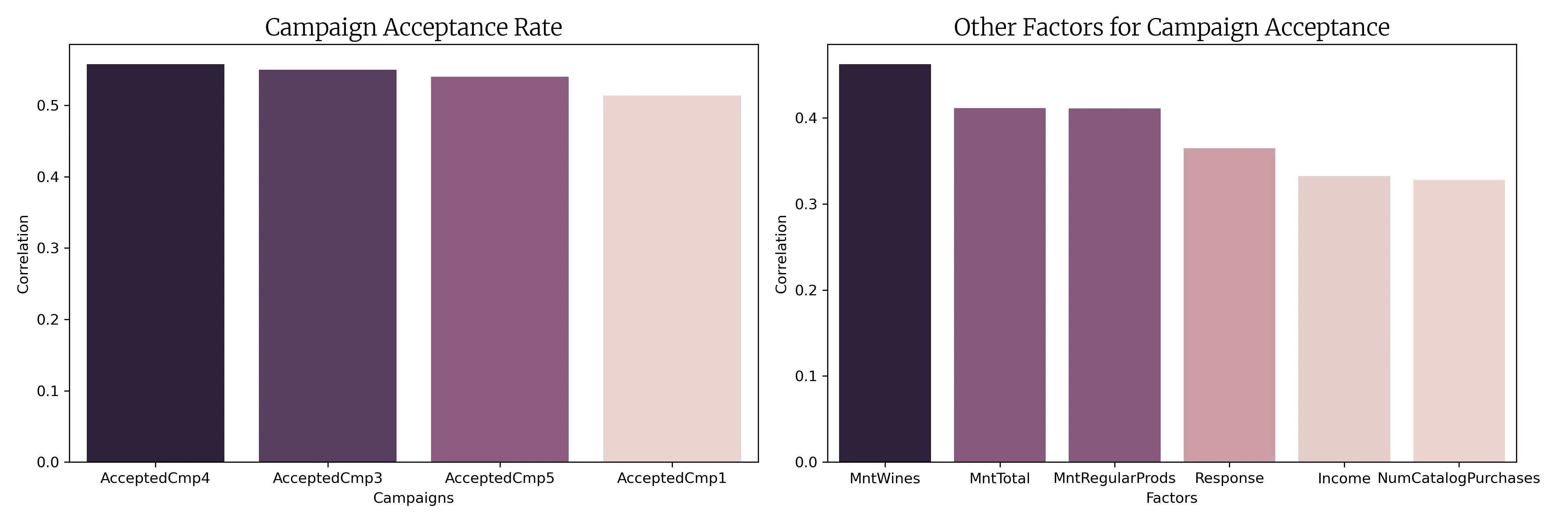
Campaigns 3-5 were most effective at converting customers while Campaign 2 was significantly less effective. Campaigns showed a strong relationship with total spent on wine products (even more than total spent overall).
Recommendations:
- Continue using more recent campaign strategies, as these have been more effective
- Emphasize wine sales in marketing campaigns
Age Groups and Campaign Conversion
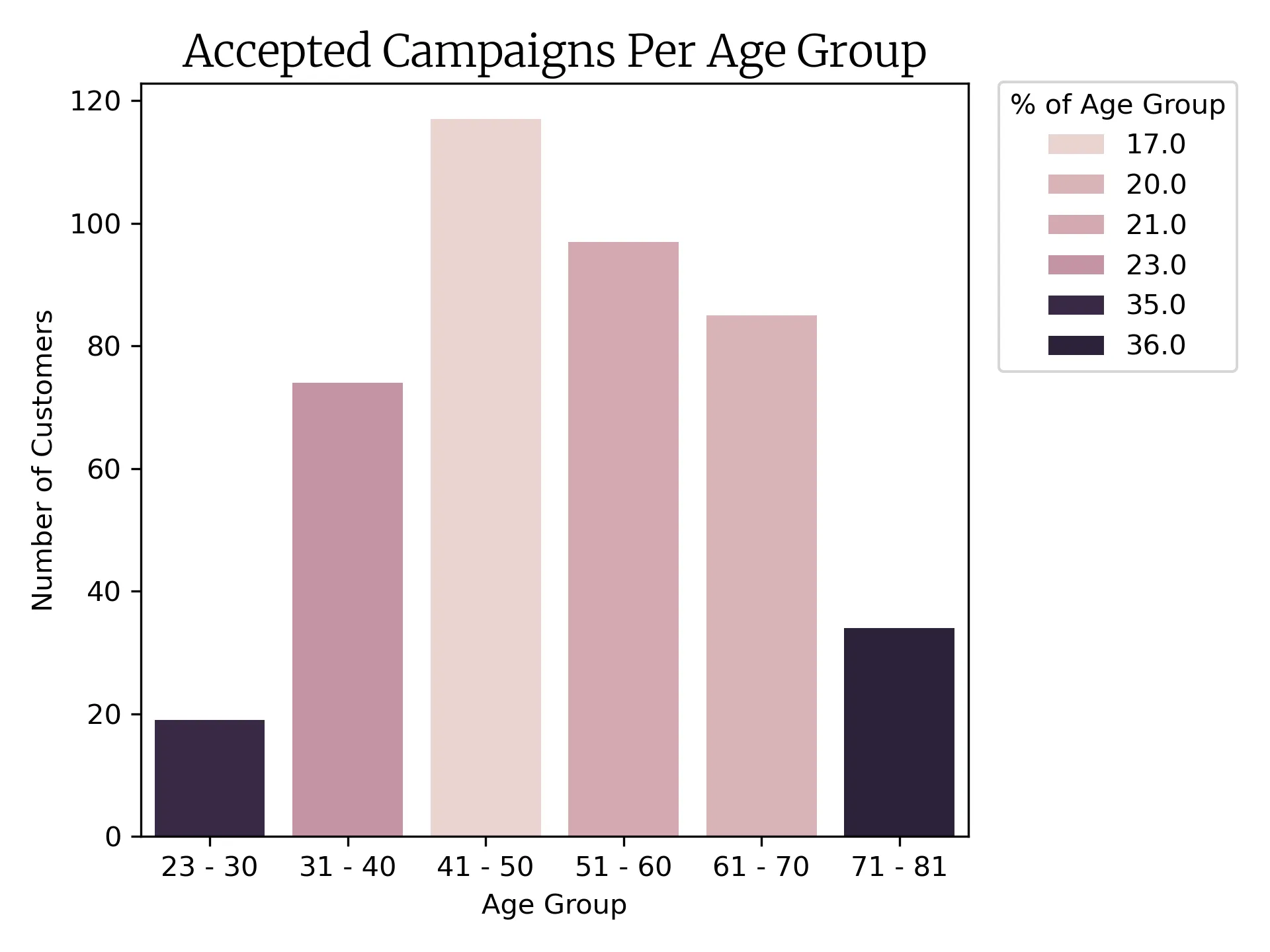
The 41-50 age group is accepting the most campaigns overall, but has a lower conversion rate. Meanwhile, 23-30 and 71-81 age groups have a higher conversion rate for campaigns, but far fewer customers fall in these age brackets.
Recommendations:
- Work on increasing conversion for ages 41-50 where they have the highest accepted campaigns but at a significantly lower conversion rate
- Focus on bringing in more users between ages 23-30 and 70+. While these demographics are a smaller portion of the total user base, they have a significantly higher campaign conversion
Campaign Methods: In Store, Web, Catalog
While in-person and web sales account for a majority of sales, catalog customers were more likely to accept campaigns (8% increase).
Recommendations:
- Consider increasing investment in catalog campaigns to see if it generates more sales without impacting online or web purchases
- Or consider stronger marketing effort for in-store purchases since it accounts for the biggest percentage of overall sales
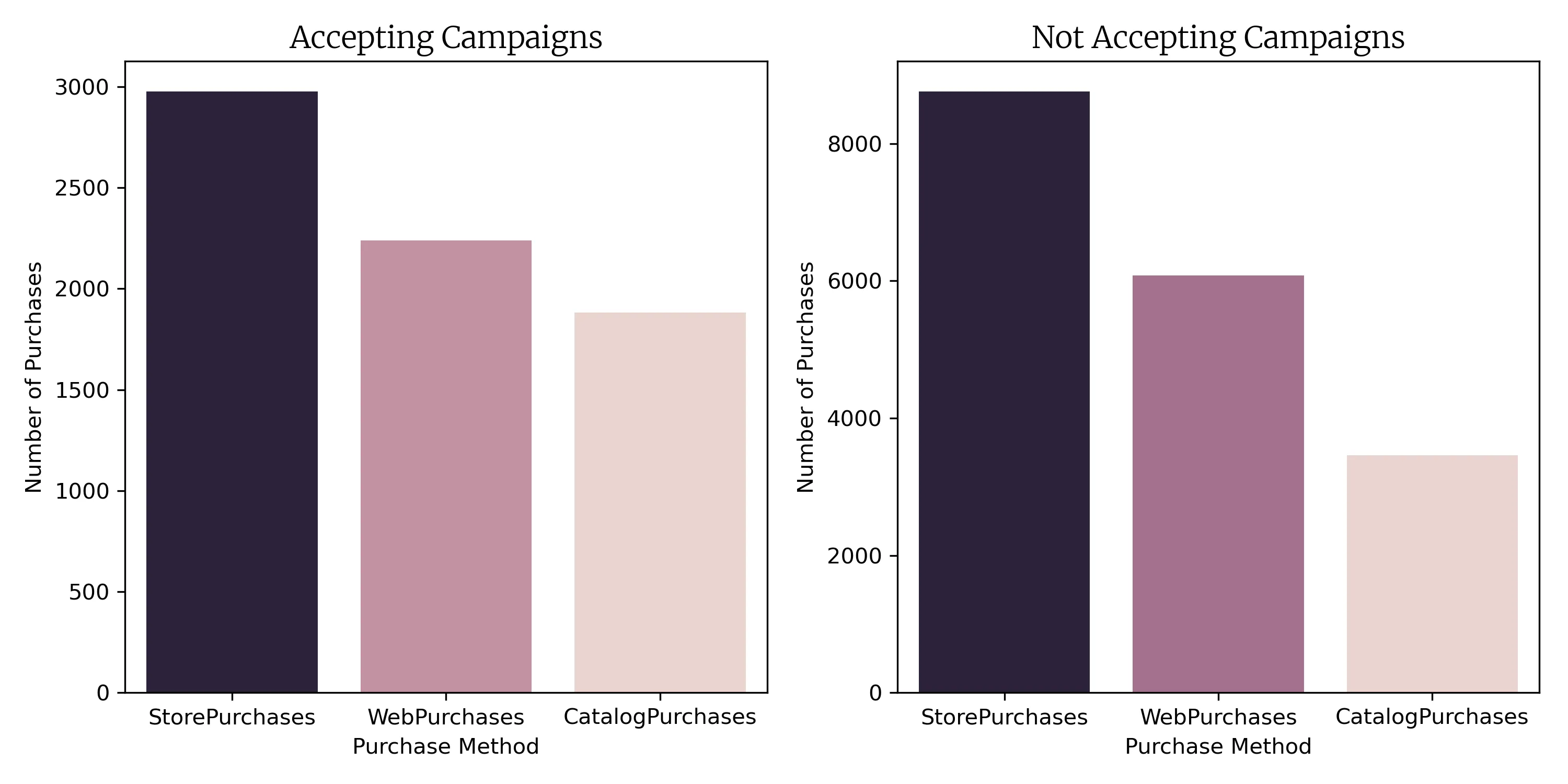
8% increase on Catalog Purchases for those accepting campaigns.
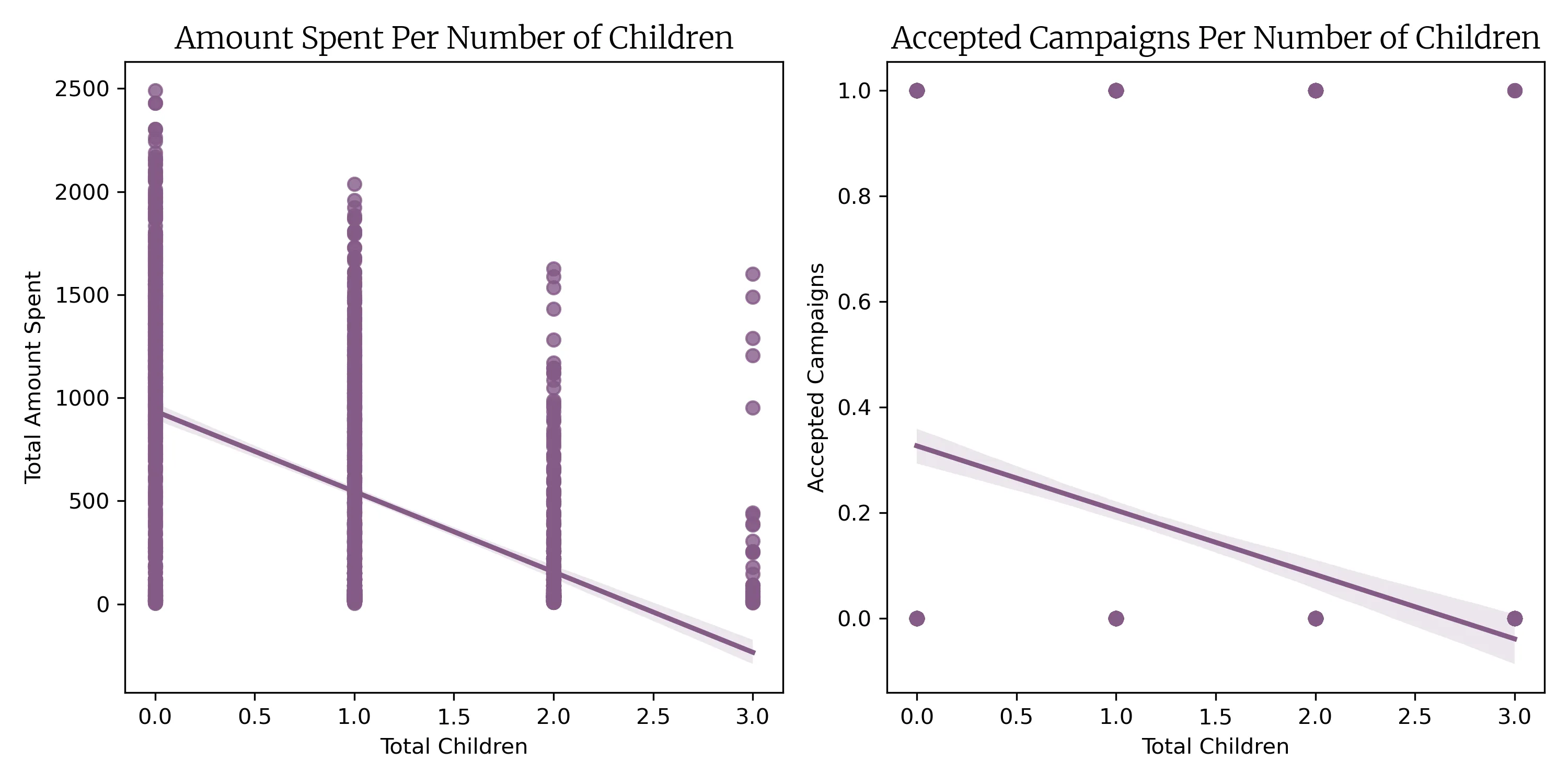
Amount Spent vs Number of Children
The fewer children a customer has, the more likely they are to accept campaigns and spend more.
Recommendations:
- Focus marketing efforts on those with fewer children
- Explore product and marketing offerings for families
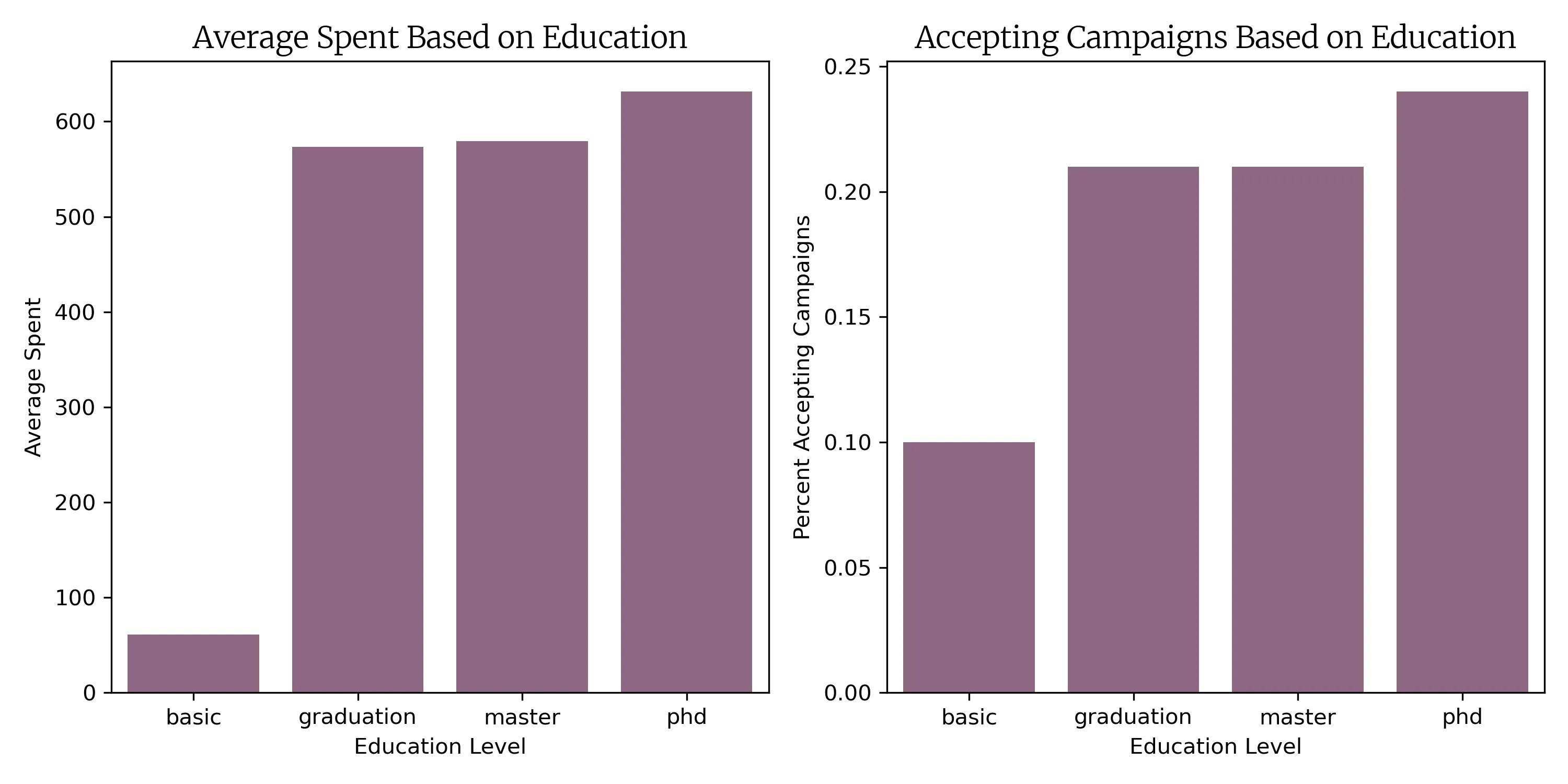
Average Spent Based on Education
Those with a basic education level have a low average order value and accept significantly fewer campaigns. All other education levels have a comparable order value and campaign acceptance.
Recommendations:
- Focus marketing efforts on those with at least a graduation education level
- Explore why basic education level individuals are less receptive to campaigns and overall spending
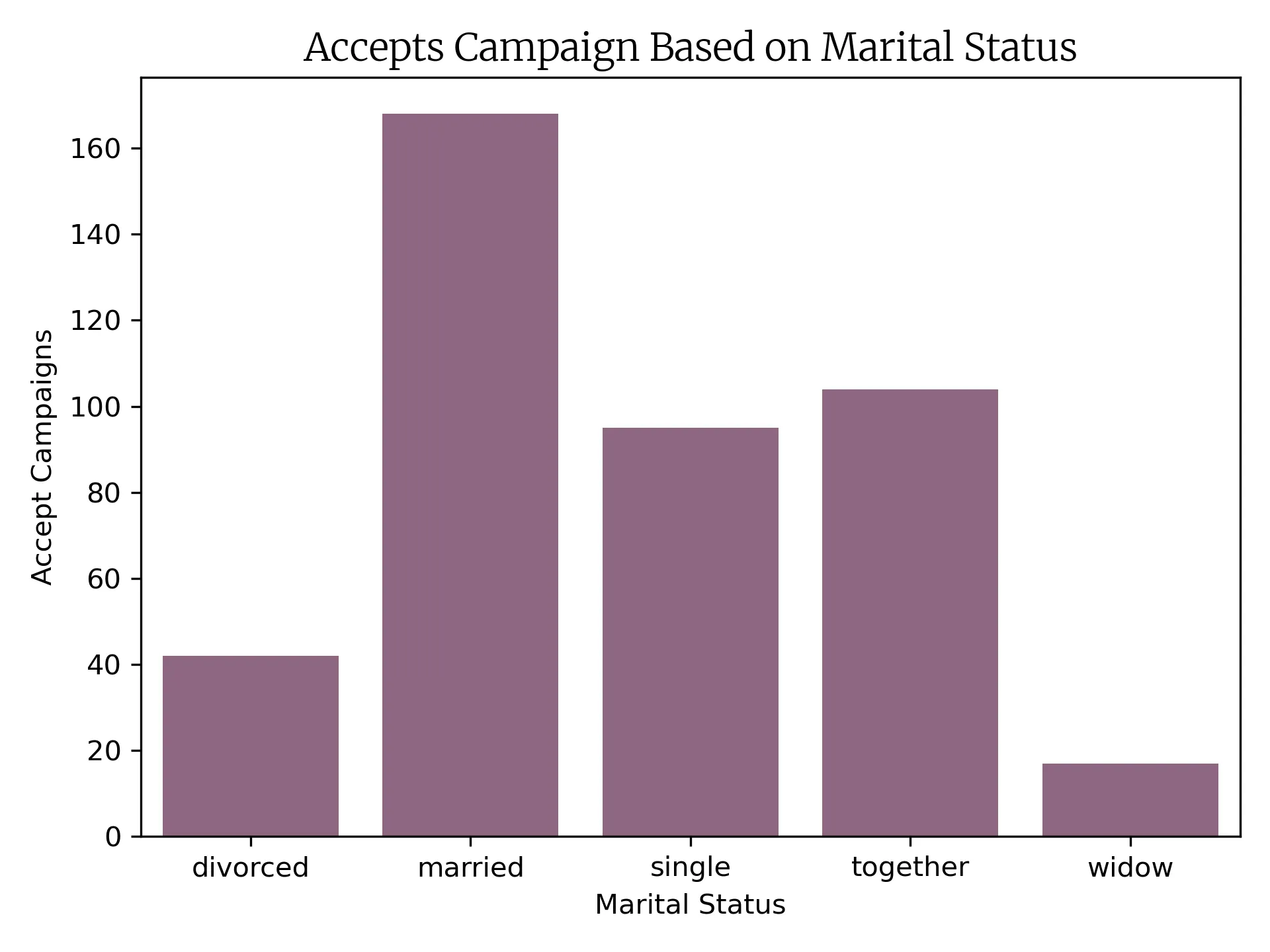
Campaign Acceptance Based on Marital Status
Customers that are married or together accept more campaigns than other demographics. Similar results found in total spent.
Recommendations:
- Increase marketing effort towards customers that are married, since they have a significantly higher acceptance rate of campaigns and total money spent
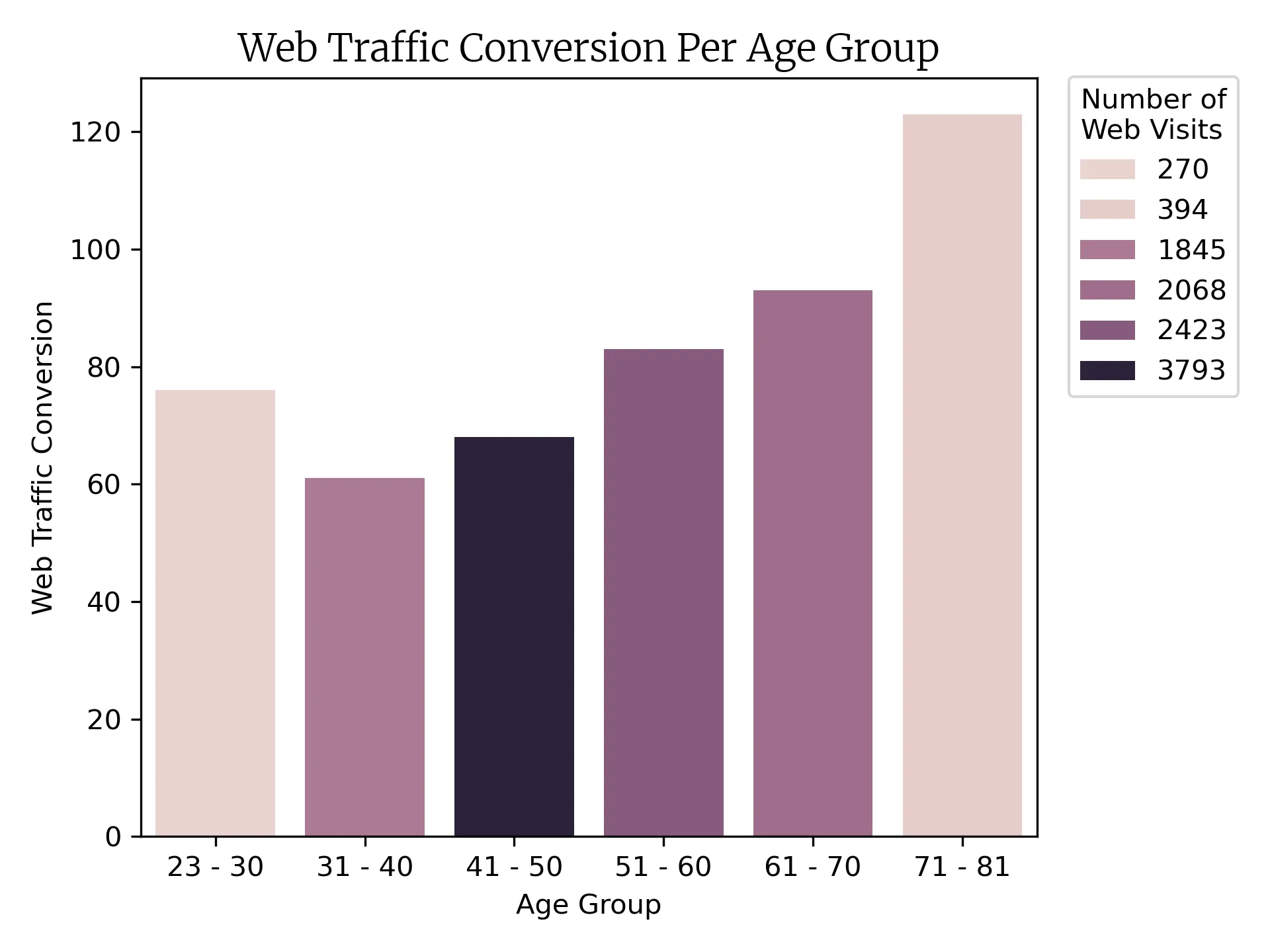
Web Traffic Conversion
Web conversion rates are generally high for all demographics. However, ages 31-50 account for the most website visits and have a lower conversion rate compared to other age groups.
Recommendations:
- Focus on increasing web conversion for 41-50 age group since it has the highest web traffic and a lower purchase conversion
- Try to expand user base for demographics that show high web traffic conversion
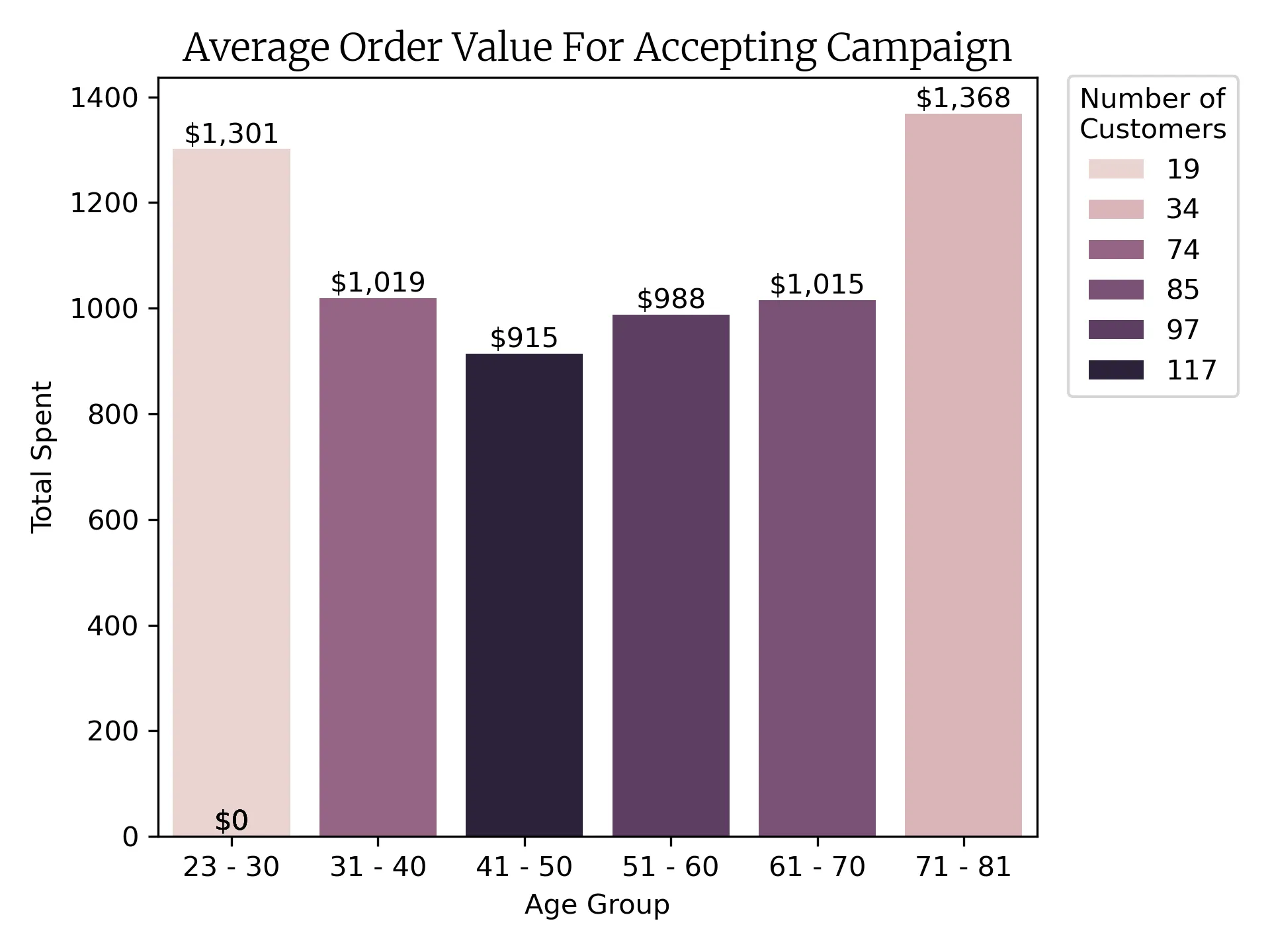
Average Order Value
Age groups of 23-30 and 70+ have significantly higher total spent when accepting campaigns. While 23-30 and 70+ age demographics have accepted more total campaigns at a lower average order value.
Summary
Key Takeaways:
- Married, educated users with 0-1 children are the most likely to accept campaigns and spend more
- Campaigns are effective in increasing wine sales, and more recent campaigns (3-5) have been more effective
- Age groups of 23-30 and 70+ are smaller in population size, but show promising results with higher campaign conversions and web traffic conversion
- Catalog customers are more likely to accept campaigns than in-store or web purchases (by 8%)
Methodology
Data Processing:
- Cleaned and transformed customer transaction data
- Created derived metrics for campaign acceptance rates, conversion rates, and customer lifetime value
- Segmented customers by demographics (age, education, marital status, family size)
Analysis:
- Calculated campaign acceptance rates across demographic segments
- Analyzed purchase channel effectiveness (web, catalog, in-store)
- Compared conversion rates and average order values by customer profile